Mirror Walk
Introducing my Substack, reflecting on the Dinnseanchas Project and what is to come in 2026

The year has turned on its axis. I’d like invite you ‘round the fire’, so to speak, to share something I’ve worked on over the last year and something I’m excited about this year.
You’re reading this because you subscribed to my mailing list or you have mysteriously found your to this digital fireside. You are free to leave at any time but you might just be curious to stay for the warmth, the craic and the juicy gossip.
I’ve lost a good deal of trust in how other social platforms use my information and I’m starting to find an alternative ‘space’ online here on Substack to share the process behind projects and to dive a bit deeper into what motivates me as an artist. If you would like to stay on as a subscriber, you’ll hear about my collaborations, projects, events, curious one-off or special edition artworks. As you might already know my artistic work is interdisciplinary, nature centred and often socially engaged and there will be also an opportunity for you to support this unfolding work. Creating meaningful relationships with communities and the environments they inhabit is an often slow and unpredictable journey. The funding landscape for artists working in this way is precarious. Regular, small donations create a vital web of support for me to continue to sustain and share this work I do. Whether you support as a paid subscriber or are just curious to drop in here for a peek, you’ll get a more nuanced perspective on what I’m working on. I think online Substack might be somewhere to build a meaningful connection with you guys until we meet in person, which I hope is soon. Let’s see how it goes.
Dinnseanchas
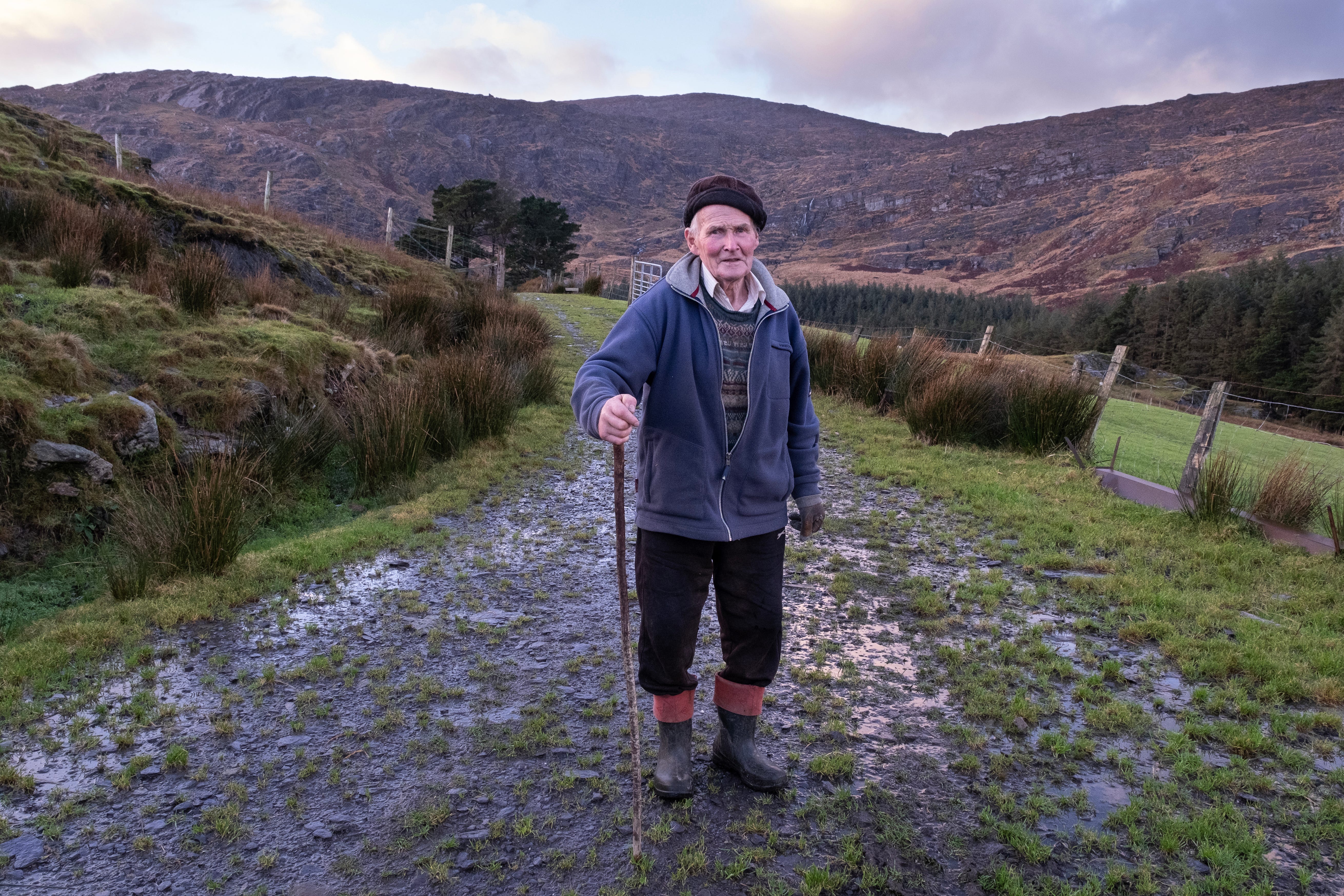
When I first met Seán Cronin, a native of the Borlin Valley, he told me of an old man back in the early last century whose dying wish was for his body to be returned to his home place in Gougane Barra, the next valley east. It was said that his body was carried by hand over the mountain, This little story stayed with me on my visits to the Borlin and Coomhola valleys in West Cork Ireland as one of the 7 commissioned artists in the Dinnseanchas Project produced and funded by the Hometree charity and Creative Ireland. The Dinnseanchas (lore of place) project weaves voices of farmers, artists, and communities reflecting on land, language, and belonging in Ireland’s coastal uplands.
During the year I met with older farmers and community members in the West Cork hills who have lived through dramatic changes in their lifetime. Their stories of hardship and profound community cooperation and care for the land were remarkable. This story of a human’s deep belonging to a home place, the labour in living (and dying) in this landscape and the deep loss felt for an older culture departing are familiar narratives. But it does reach to the very craggy heart of where we find ourselves today in these rural communities in the wake of more monumental species loss, climate change and cultural loss. What from the past might we hold onto and what might we lay to rest?
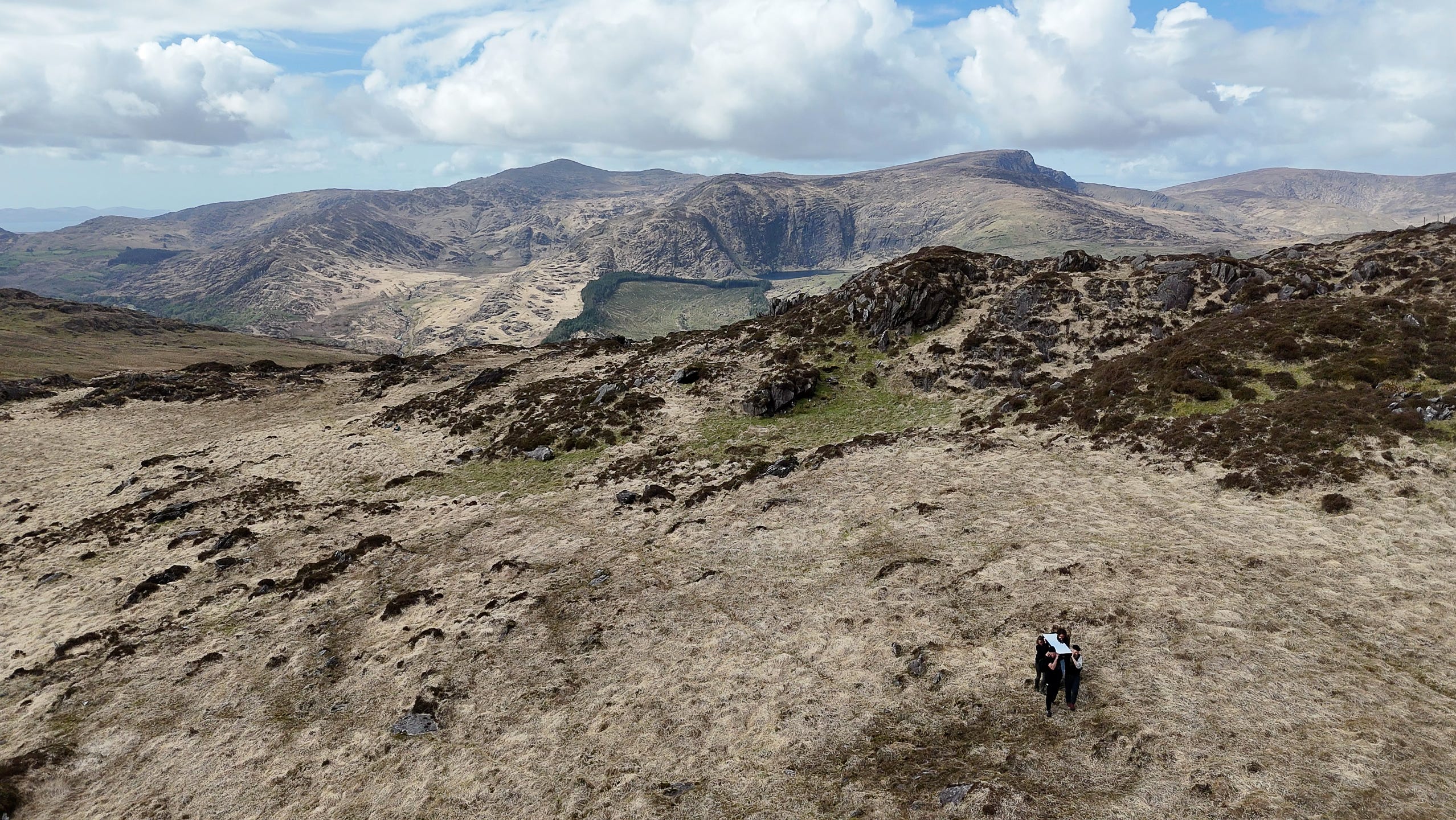
We carry a mirror over the mountain.
One at each corner, myself and Seán Cronin at the front and Jenny and Aaron at the back, arms around each other’s shoulders as though bearing a coffin. Blue skies and fast-moving clouds reflect on the mirror’s surface. Seen from above, the mirror carves a blue rectangle of sky into the brown mountain heath.
We move tentatively forward feeling with our feet as we carry the mirror, little mounds of fionnán grass, heather and blooming furze carpet our route. In places the track disappears and our footing falters but Sean knows his way through these hills. He has walked this route since a young lad, like generations before him, when it was quicker to walk over the hills than drive around them.
We are heading over to Gougane Barra to meet Breda who, alongside her son, Neil, have been collecting an astonishing amount of Irish place names from their valley. Before we get there we must descend through an Phoill - the hole, a sharp cleft in the rock which is devastatingly steep. It was the quickest (and most used) route across from one valley to another. It brings us all onto our bums. We slowly slide, grab, lever and shuffle our way down the mossy, slippery dark passageway. We pass the mirror down from one person to the next. It’s now that my idea of bringing a mirror with us seems ridiculous.
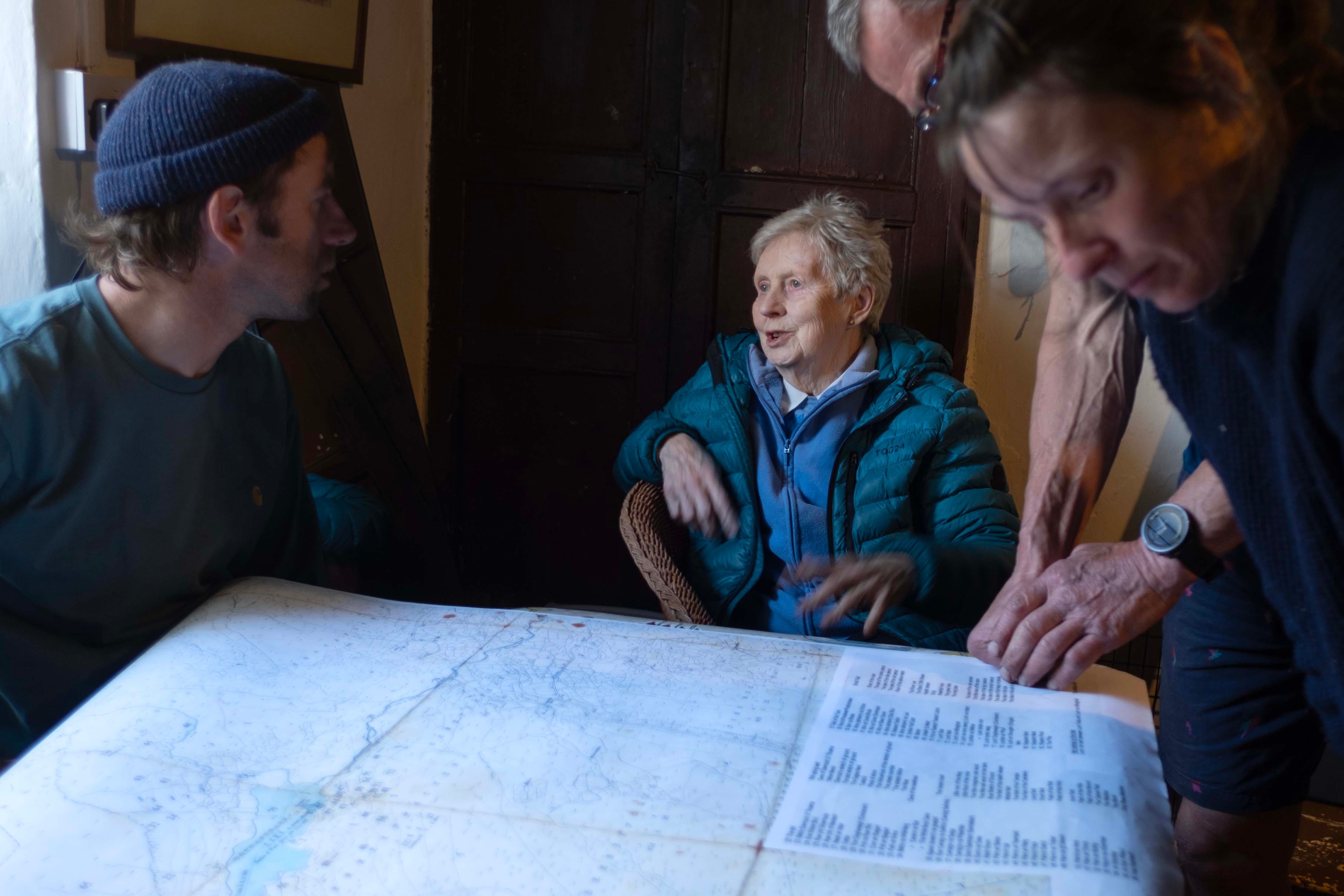
Later in Cronin’s bar we gather to watch Breda unroll her map on the table. The map includes over 80 Irish names and their English translations. Names remembered by Breda and members of the community. I read some of those along the route that took us here.
An Poil Cúimín Ghadhar - The dogs hollow
Cumar na Caillí - Glen of the hag
Lochán an Phoill - The lake in the hole
Doirín Samhlach (Samhaltach) - the little imaginary oak wood.
Carraigín na Seaga - little rock of the crow
Slánán - Health stream
and then a name for the little stream in the valley
Mún an Duine Bhuile - The pee of the cranky man
It is a treasure map to a hidden landscape. What strikes me most is the everydayness of names that were first and foremost practical, like town signposts. But unlike present day signage these place names are born of the people, animals, rocks and plants that once and, in places, still do populate this landscape. Just before we leave Cronin’s bar I notice the mirror is leaning against the wall where Breda sits, reflecting her and all of us about the table talking. In thinking and talking about the future, I realise the value of looking back, not with sentimentality but with clear eyed curiosity at the ways in which we used to interact and connect with our locality. It makes me wonder how we might name our landscape anew for today.
In late December 2025 just after Christmas Seán Cronin and myself organised a community screening of the Mirror Walk and Dinnseanchas Film at his house in the Borlin the Valley. It was a remarkably full house, so much so that there was a traffic jam up the valley. The screening was followed by live music and set dancing with all ages present. It was a groundswell of local interest, perhaps a sign of things to come.
Up next month > The Straw Barn
Next month I’ll share the story behind our Straw Barn, a new collaborative arts studio myself and my husband having been building since 2023. It is situated on the wild Irish West Cork Atlantic coast and will be a haven for the arts, intercultural exchange and natured centred knowledge. Join me here in February..
Wonderful Will! I feel I could make a contribution to the pee of a cranky man! 😉 xx